

Up to 80% of what a child learns comes through their eyes, yet school screenings miss many vision problems. Our doctors have pediatric experience and know how to make an exam fun and stress-free for kids ages 6 and up.
When should my child have their first eye exam?
The American Optometric Association recommends a first exam between 6 and 12 months, another at age 3, before kindergarten, and then yearly through school. Kids rarely complain about blurry vision because they assume everyone sees the way they do.
Our offices see children ages 6 and up who know their letters. For younger children, we refer to a trusted pediatric optometrist with the specialized equipment for infant and toddler exams.
What we look for
Nearsightedness, farsightedness and astigmatism; amblyopia (“lazy eye”); strabismus (eye turns); focusing and eye-teaming problems that affect reading; and the overall health of the eye. If your child is becoming nearsighted, we will talk with you about myopia management options that can slow it down.
Signs your child may need an exam
Squinting, sitting close to screens, head tilting, frequent headaches, rubbing eyes, losing their place when reading, or avoiding near work.
Frequently asked questions
Does my child need to know their letters?
Ideally, yes. We see children ages 6 and up who can identify letters on an eye chart. For younger children, we refer to a pediatric optometrist with equipment designed for early-childhood exams.
Will drops be used?
Sometimes. Dilating drops help us get an accurate prescription in children whose focusing system is very active. We will explain everything before we start.
Do you carry kids’ frames?
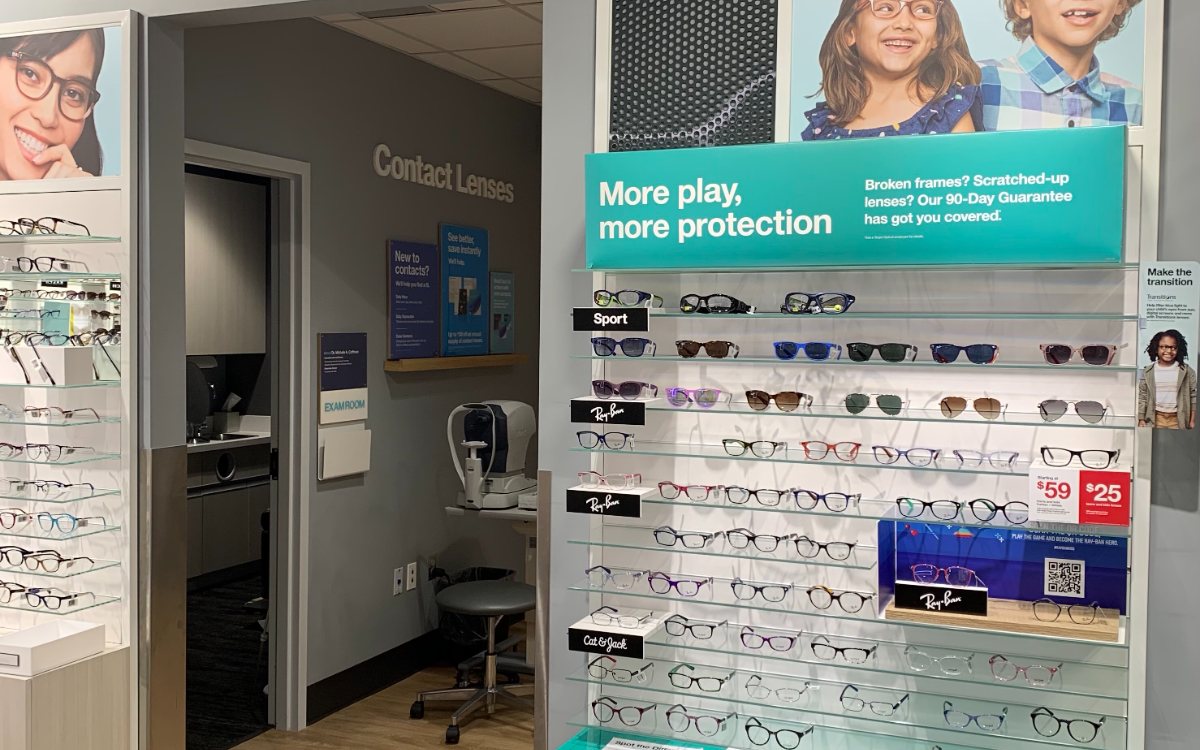
Yes — durable, flexible frames sized for children, plus impact-resistant polycarbonate lenses.
This page provides general eye-health information and is not a substitute for an exam with your doctor.
Ready to see clearly?
Request an appointment online or call the office nearest you — we’ll find a time that works, including Saturdays.