

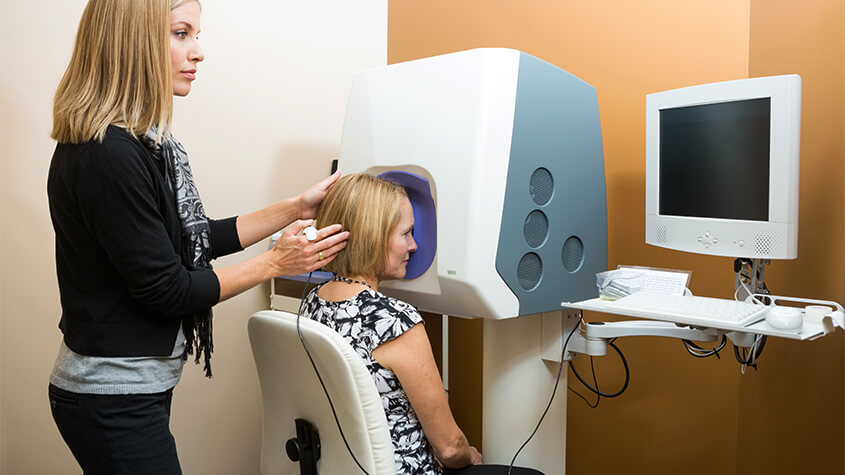
The retina is the only place in the body where blood vessels and nerve tissue can be viewed directly. Optomap® captures more than 80% of it in a single, quick, comfortable image — helping us detect retinal tears, glaucoma, macular degeneration, diabetes and even signs of hypertension and certain cancers earlier.
How it works
You look into the device one eye at a time; a low-powered scanning laser captures a 200° panoramic image in under a second. No touch, no drops, no discomfort. Your doctor reviews the image with you on screen during your exam.
Why it matters
Traditional undilated views show about 15° of the retina. Optomap shows the periphery where many problems begin. Images are saved so we can compare year to year and catch subtle changes.
Available for every patient
We offer Optomap at both offices to adults and children. It is especially valuable for patients with diabetes, high myopia, a family history of retinal disease, or flashes and floaters.
Frequently asked questions
Does Optomap replace dilation?
For most routine exams, yes. Your doctor may still recommend dilation if the images show something that needs a closer look.
Is it safe for kids and pregnant women?
Yes — it uses low-intensity light and no drops.
Is there a cost?
Optomap is an optional screening with a small fee typically not covered by vision insurance.
This page provides general eye-health information and is not a substitute for an exam with your doctor.
Ready to see clearly?
Request an appointment online or call the office nearest you — we’ll find a time that works, including Saturdays.